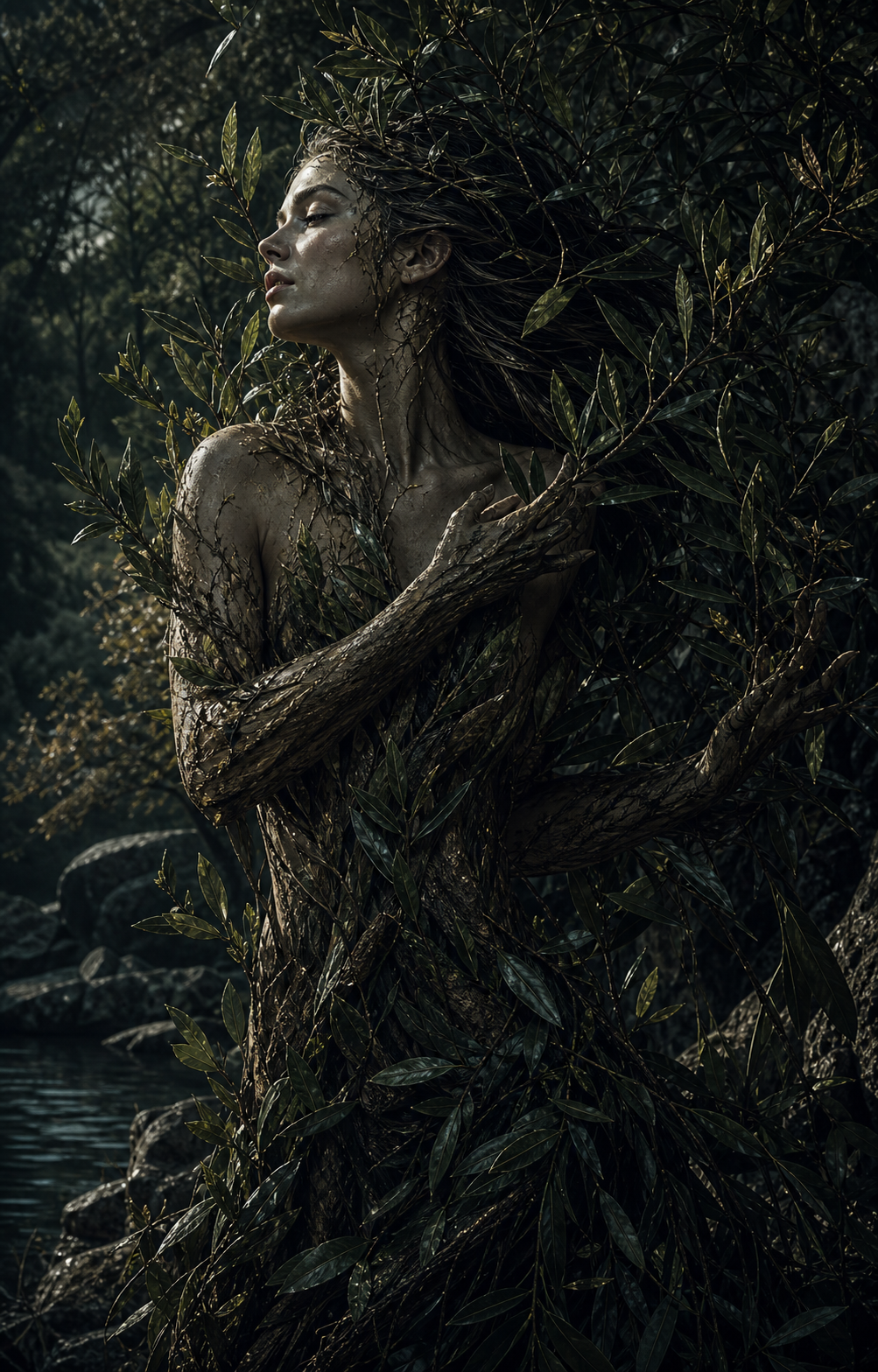
Greek · Naiad or dryad
Daphne
Daphne is most famous for fleeing Apollo and becoming the laurel. Her story turns desire, refusal, and metamorphosis into sacred botany — one of the defining myths of what happens when a nymph says no.
Springs, trees, mountains, seas
Greek nymphs are minor divinities tied to animate landscape: groves, springs, caves, mountains, and sea foam.
Palette
Named nymphs of pursuit, transformation, prophecy, memory, and wild sanctuary.
Daphne is most famous for fleeing Apollo and becoming the laurel. Her story turns desire, refusal, and metamorphosis into sacred botany — one of the defining myths of what happens when a nymph says no.

Echo is a mountain nymph whose myth explains a voice that survives as repetition. She is tied to Hera's anger, Narcissus, and the ache of being heard only in fragments — a story about what remains when the body is gone.

Calypso is the nymph of Ogygia who detains Odysseus in the Odyssey. She offers shelter, desire, and even immortality, but not the home he seeks — a paradise that becomes a prison when longing outlasts comfort.

Arethusa is a nymph transformed into a spring, especially associated with Ortygia near Syracuse. Her myth links pursuit, water, and underground passage — one of the great stories of escape through metamorphosis.

Thetis is a Nereid, a sea nymph of unusually large mythic importance. She is the mother of Achilles and a figure of prophecy, protection, and divine constraint — a nymph whose power reaches the center of epic war.

Syrinx was a chaste Arcadian nymph who fled the god Pan and was transformed into the reeds from which he made his pipes — a myth of music born from pursuit and loss.

Minthe was a nymph of the underworld who boasted of her beauty and her claim on Hades, and was trampled into the herb that still grows near springs and graves — a story of jealousy, pride, and the sharp green persistence of memory.

Cyrene was a Thessalian huntress nymph who wrestled a lion bare-handed and became the namesake of a Greek city in Libya. Her myth turns wilderness, violence, and desire into founding legend.

Galatea is a sea nymph loved by the mortal shepherd Acis and desired by the cyclops Polyphemus. Her story turns Sicilian landscape into a triangle of beauty, jealousy, and water that remembers the dead.
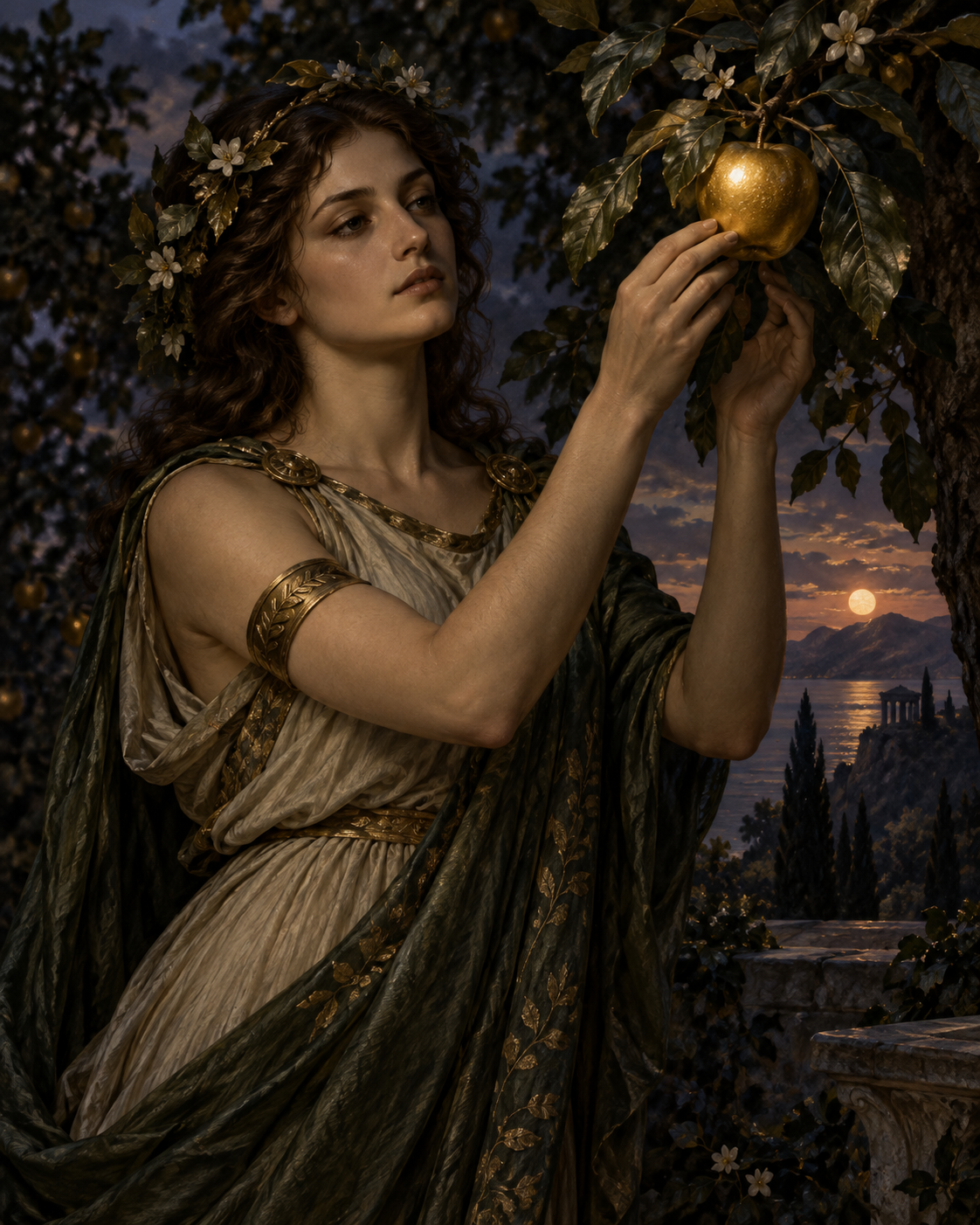
Aegle is one of the Hesperides, the nymphs of evening who guard the golden apples in a garden at the world's western edge.
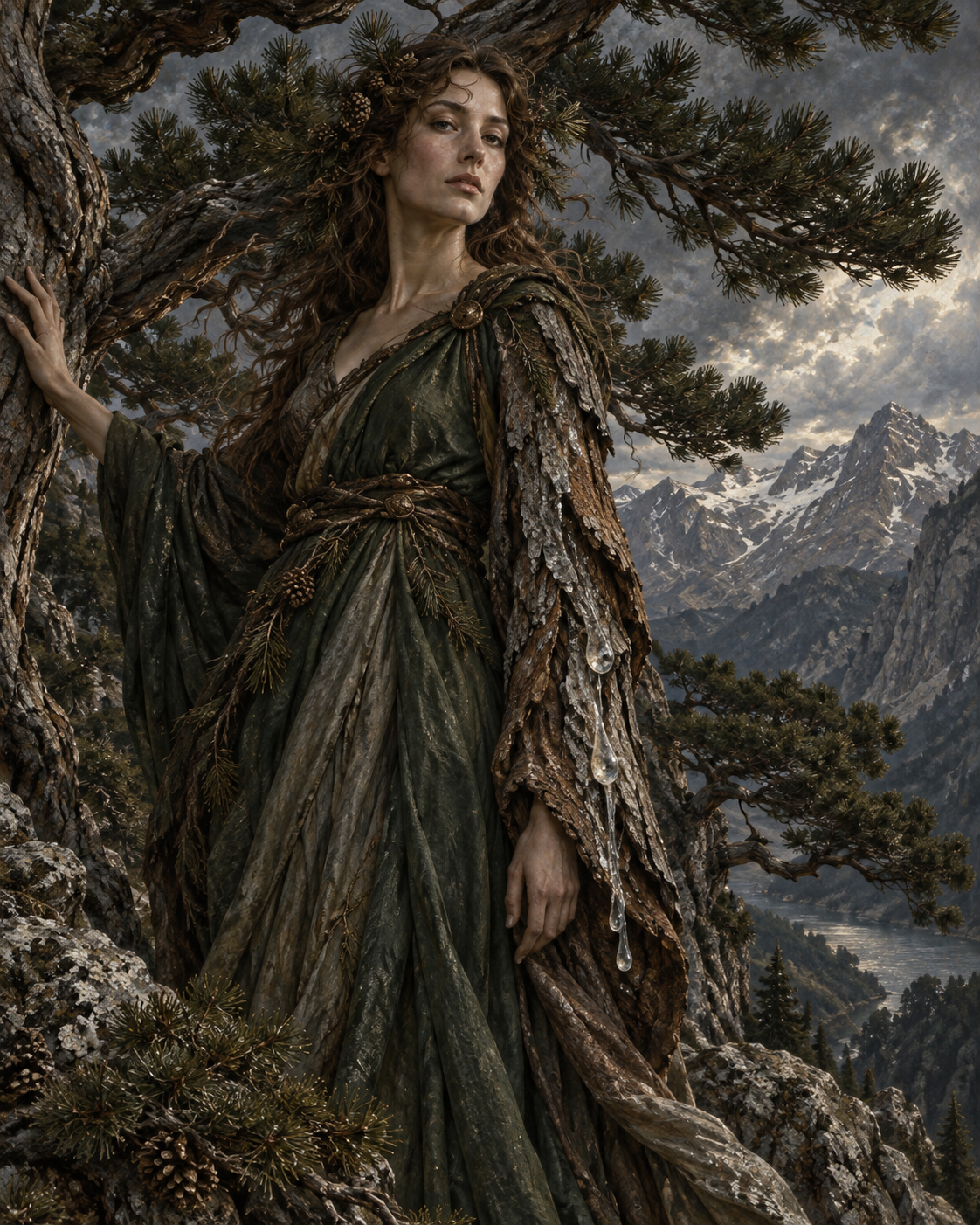
Pitys is a mountain nymph associated with the pine tree, remembered in Greek poetry through Pan's pursuit and her transformation.
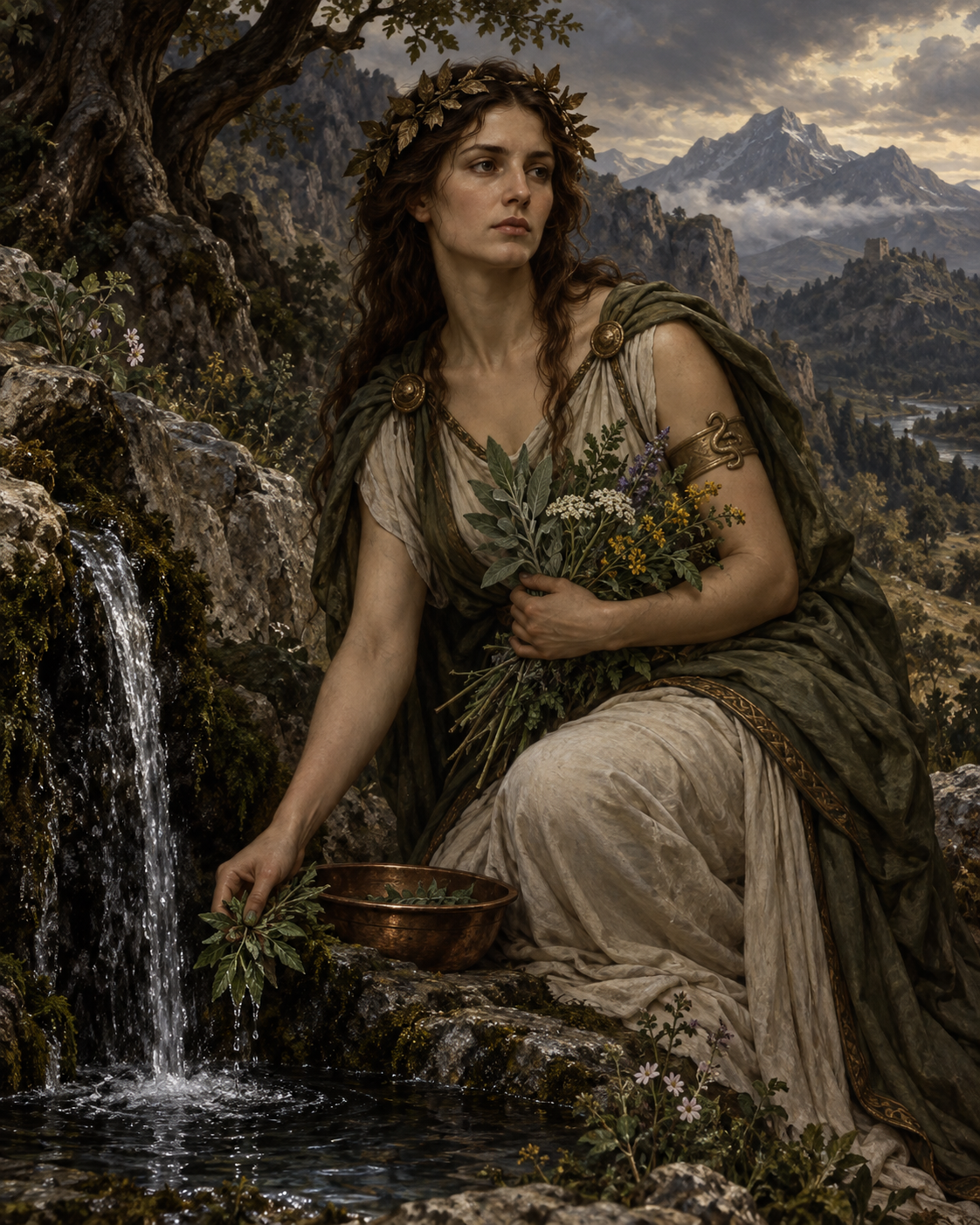
Oenone is the nymph of Mount Ida who loved Paris before Helen, a healer whose knowledge could not protect her from abandonment.

Clytie is an Oceanid whose unreturned love for the sun god ends in transformation into a flower that turns toward his light.
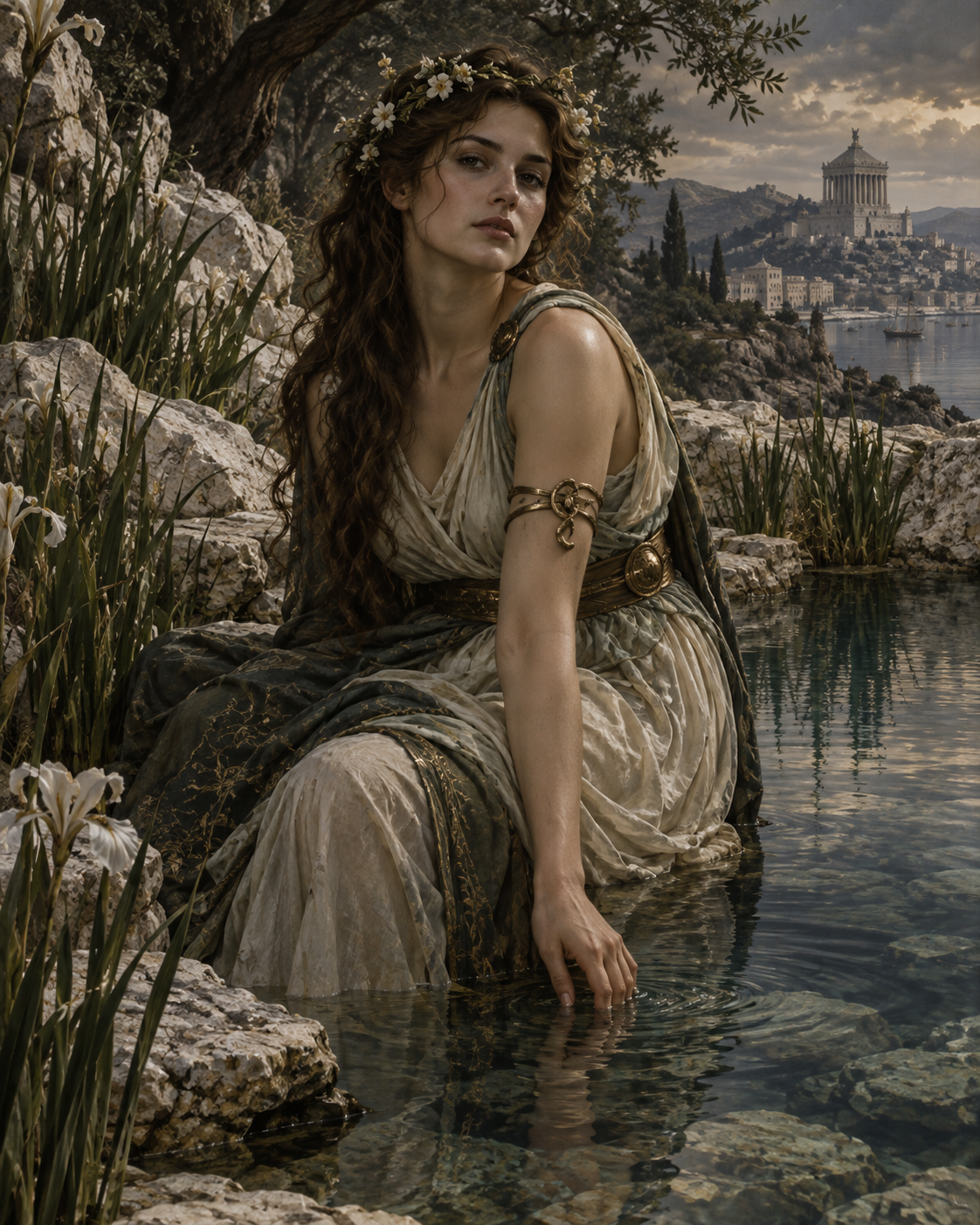
Salmacis is the nymph of a Carian pool, best known for Ovid's disturbing account of her encounter with Hermaphroditus.

Doris is an Oceanid, wife of Nereus and mother of the Nereids, whose daughters include Thetis and Galatea.